
'So, what does one believe -- just 6 stocks that are pushing the indices higher or the 600 scrips that are reflecting economic pain?'

In the past two months alone, four companies have garnered a cumulative Rs 22,400 crore via this route.
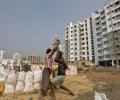
A recent report by Citi had pegged the total amount stuck in stalled projects across seven major Indian cities (Bengaluru, Mumbai Metropolitan region, National Capital Region, Ahmedabad, Hyderabad, Kolkata and Pune) at Rs 80,000 crore.

'The announcement has come too late. This should have been done years ago.'

Out of 11 companies that got listed in 2019, nine have outrun the market by gaining more than 10 per cent against their respective issue price.

Despite the 3 per cent gain in September 2019, the FPI sell-off during the quarter has seen the benchmark indices - the S&P BSE Sensex and the Nifty 50 register negative returns in Q3CY19.

YES Bank, Bank of Baroda, SBI, IndusInd Bank, and RBL Bank are amongst the banks, Jefferies says, are most prune to "high risk" emanating from ADAG, Cox & Kings, CG Power, DHFL and Essar Shipping.

So far in September, the S&P BSE Small-cap index has gained nearly 3 per cent as compared to a modest 0.2 per cent dip in the S&P BSE Sensex.

The current slowdown has lasted for over 18 months and is the longest incident of sluggishness since 2006.
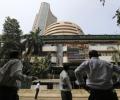
After turning net buyers for the fifth straight month till June, foreign portfolio investors (FPIs) withdrew a net of Rs 11,743 crore ($1.7 billion) in July. This was their highest outflow since October 2018.

Over the past one-and-half years, the number of stocks trading below their respective face value has increased 29 per cent after a sharp correction in stocks of small-cap companies.

An analysis of past 20 years' demand cycles done by Edelweiss Securities indicates that the auto sector is currently in the middle of a down cycle. Volume recovery, they say, is unlikely to be as sharp as in the past, unless there is strong fiscal support.
The proposal to increase public float, hike income tax surcharge, move to tax share buybacks and lack of stimulus to shore up economic growth has hurt investor sentiment.
Prices in Bengaluru, the National Capital Region, Hyderabad and Ahmedabad, however, witnessed an uptick during the period.

Liquidity issues post the crisis at DHFL, progress of monsoon, rupee trajectory at the domestic level and oil prices are some factors that will keep markets choppy, analysts say.

The liquidity crisis at Dewan Housing Finance Corporation Limited (DHFL) has dented the fortunes of ace investor Rakesh Jhunjhunwala, who increased his stake in the troubled company in the March 2019 quarter (Q4FY19).

Foreign investors, according to them, will now wait-and-watch how the economy takes shape in the backdrop of doubts over monsoon, interest rate trajectory and other global events such as the US - China trade war.

Traditionally, most PSUs have been cash-rich, which added to their value. However, the government has been tapping regularly into their cash resources to boost revenue for the exchequer

The surge in oil prices has also affected the rupee, which hit a 6-week low of 70.25 on Friday against the dollar.

Going ahead, experts say, the fundraising trend in the primary market will depend on how the secondary market performs against the backdrop of the outcome of general elections and global cues.
 © 2026 Rediff.com - Investor Information - Advertise with us - Disclaimer - Privacy Policy - Sitemap - Feedback - About us - Terms of use - Grievances